Riding the Peak Tram: what the journey up Victoria Peak is really like
The Peak Tram covers 1,278 metres of track from Garden Road to Victoria Gap in about six minutes, climbing from 33 metres above sea level to 396. Here is what happens on the ride itself, end to end.
Short answer
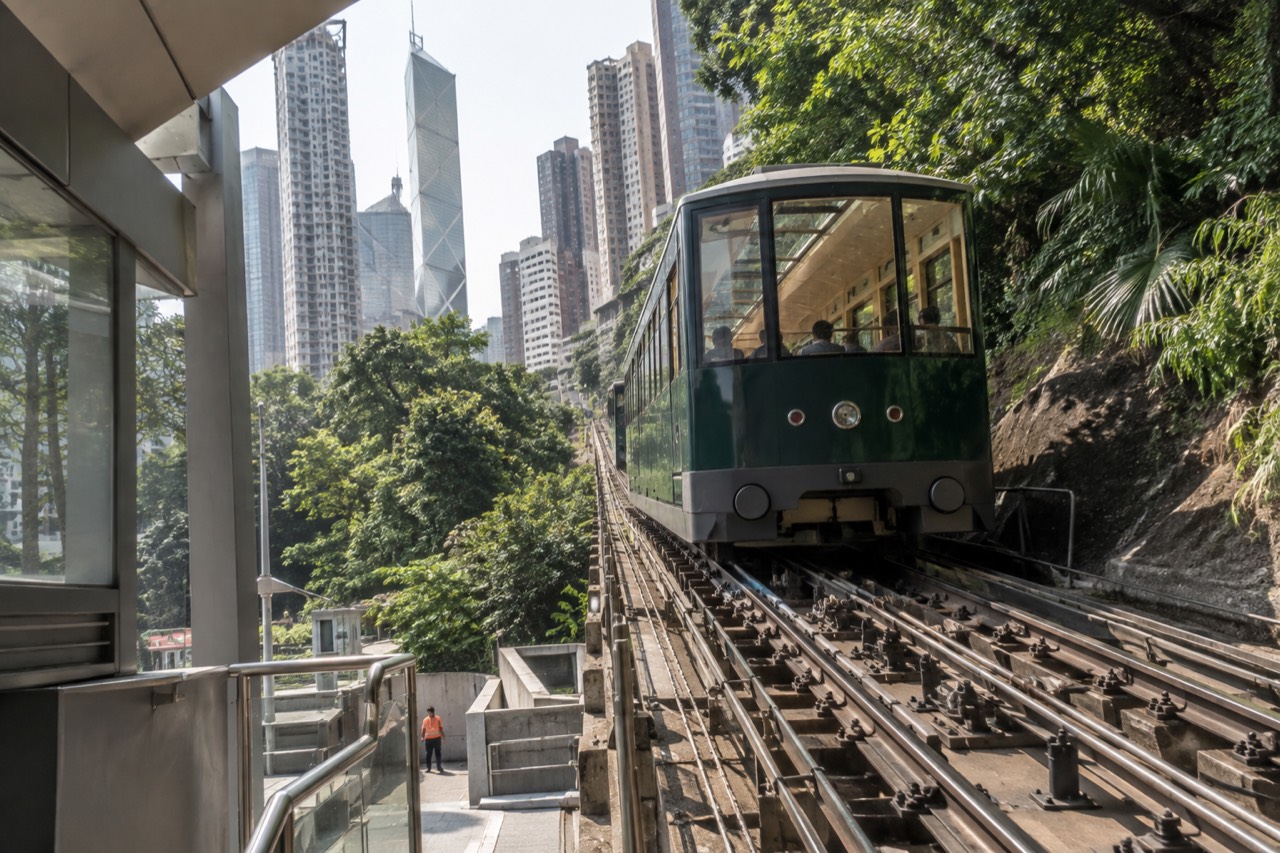
The Peak Tram is a double reversible funicular that climbs 1,278 metres of track from the Central Terminus at 33 Garden Road, 33 metres above sea level, to the Peak Terminus at 396 metres, in about six minutes. An adult single gate fare is HK$82, a return HK$116, and the current tramcars carry 210 passengers.
The Peak Tram has been climbing the same alignment since 30 May 1888, when Governor Sir William Des Voeux opened the first cable funicular in Asia. The line you ride today still follows that original route, raised over the years to give headroom over Kennedy Road, but almost everything else about it changed in August 2022, when a full rebuild replaced the haulage, control and signalling systems, the track rails and the tramcars themselves. Most descriptions of the ride circulating online still describe the retired fifth-generation system, which is why this page sticks to what the operator publishes about the current one.
This guide walks the ride end to end: what the funicular actually is, what the fare ladder looks like, what you see from each side of the car, the intermediate stations the tram passes, the famous leaning-buildings illusion, the engineering, and the practical rules that decide whether your stroller, your pet or your Octopus card gets on board. If you want the full story of the line since 1888, the companion Peak Tram history guide covers the generations, the war damage and the Governors' reserved seats.
What kind of ride is the Peak Tram?
The Peak Tram is a double reversible funicular railway running on 1,278 metres of track between the Central Terminus at Garden Road, 33 metres above sea level, and the Peak Terminus at Victoria Gap, 396 metres above sea level. It is not the Hong Kong street tramway: the double-decker "ding ding" trams on Hong Kong Island run on flat ground along the north shore and never go up the hill.
The two systems share a word and nothing else. The street tramway is a flat urban line; this one is a cable-hauled mountain railway, and mixing them up is the most common first mistake visitors make. A funicular means two cars permanently attached to each end of a haulage rope, counterbalancing as one goes up and the other comes down. On this line the haulage is done by two ropes of 50.5 mm diameter holding a 55-tonne tramcar, with a safety factor of 8. The gradient starts at 4 degrees and steepens to 25.7 degrees where the tracks pass below May Road, which is the steepest section of the whole climb. That number is the verified figure, and no ranking claim beyond it is supportable: the line is steep, but no source held here calls it the steepest anything.
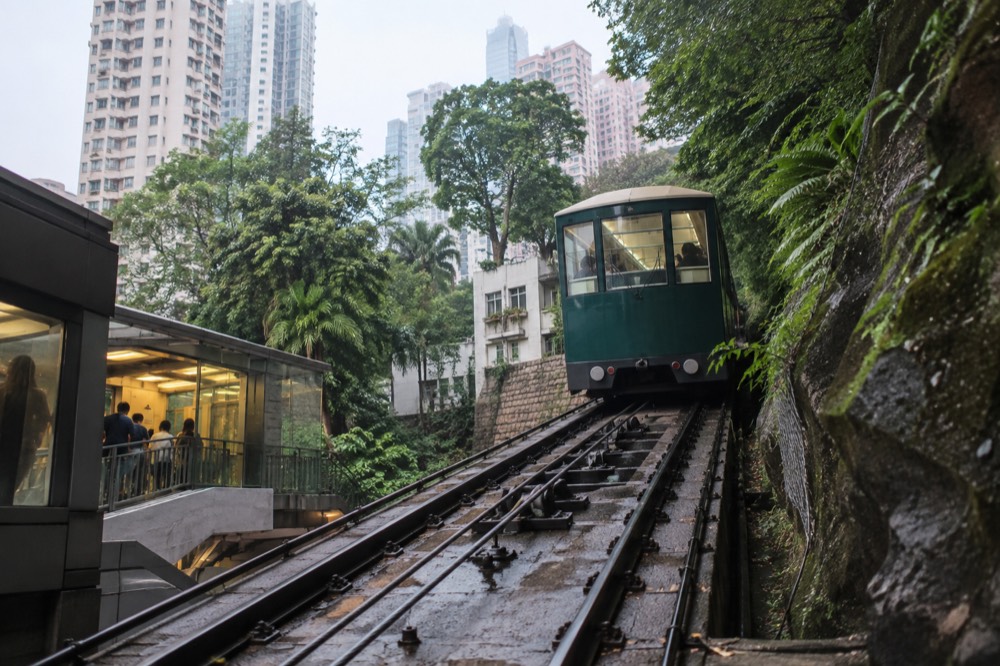
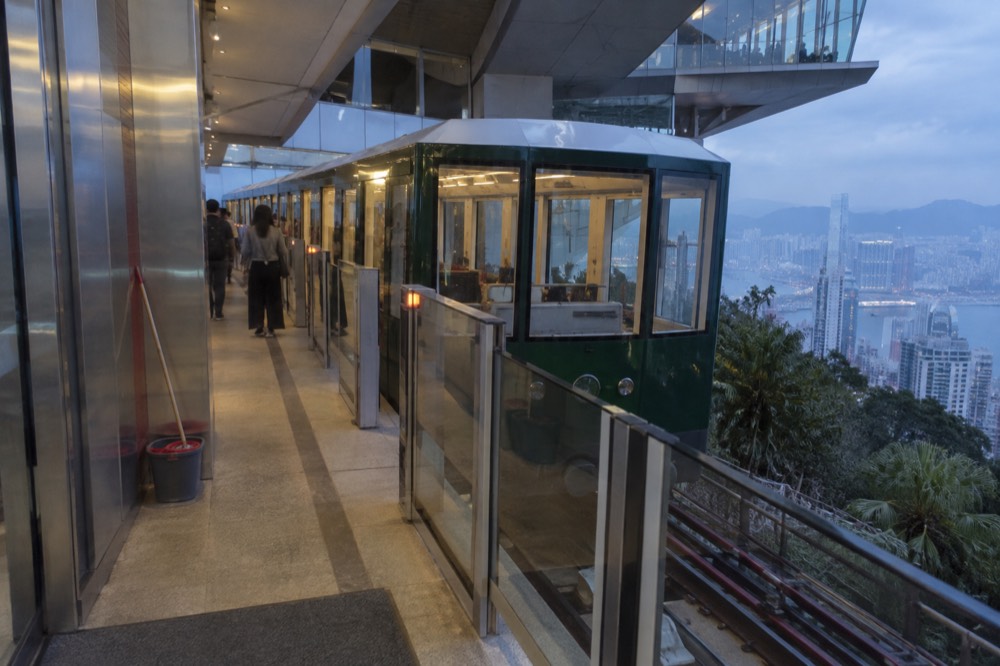
The journey takes approximately six minutes one way, which pairs with the fare to tell you what the ticket actually buys in time. Two cars run on the single-track alignment with a passing loop in the middle, so an uphill car and a downhill car meet mid-route. The current livery is a bespoke colour the operator calls Peak Tram Green, a deliberate nod to the third and fourth generation cars, so any photograph showing the old red cars dates from before the 2022 rebuild.
How long is the ride and what does it cost?
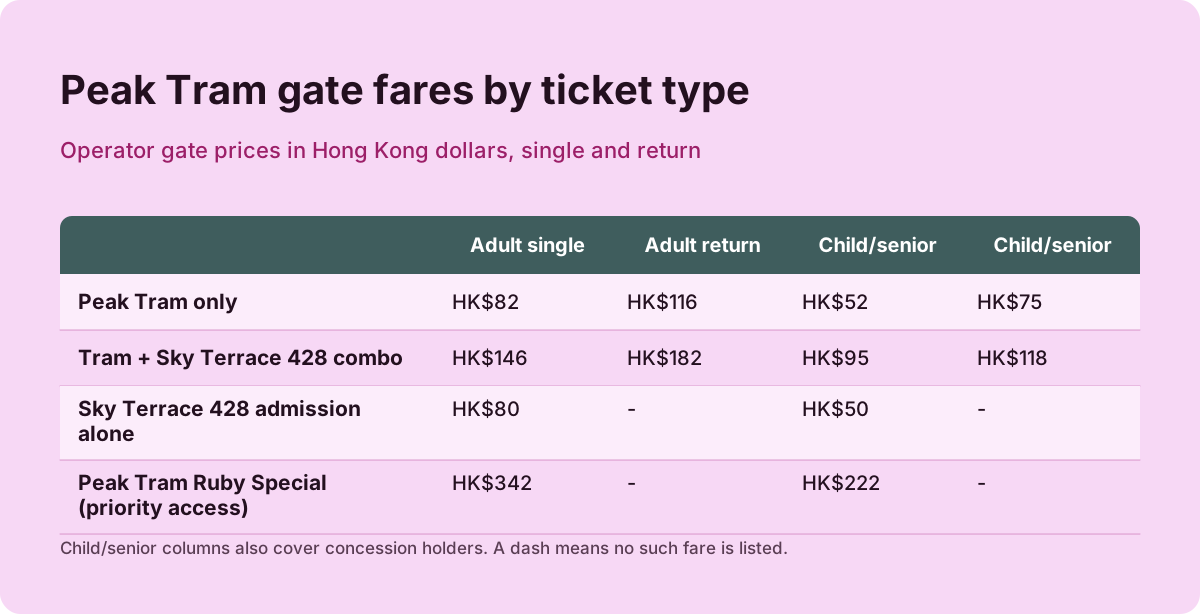
One ride takes about six minutes. The operator's published adult gate fares are HK$82 single and HK$116 return for the tram alone, with HK$52 and HK$75 for a child aged 3 to 11, a senior 65 or above, or a concession holder. The featured ticket listing starts at $10.59, which buys the one-way adult tram ride only, with no Sky Terrace 428 admission and no ride back down.
The from-price trap is the single most misreported fact about this product. The $10.59 headline figure matches the operator's HK$82 adult single exactly, and that fare covers the tram and nothing else: no viewing deck, no return journey. If you want the tram plus Sky Terrace 428 on the Peak Tower roof, the operator's published combination gate fares are HK$146 with a single tram ride and HK$182 with a return. The operator is explicit that you cannot assemble that combination saving yourself: its own FAQ says "you must select the Peak Tram Special Combo tickets to enjoy the best price". The full fare ladder is published on the operator's ticket page.
| Ticket type | Adult single | Adult return | Child 3-11 / senior 65+ / concession, single | ... return |
|---|---|---|---|---|
| Peak Tram only | HK$82 | HK$116 | HK$52 | HK$75 |
| Tram + Sky Terrace 428 combo | HK$146 | HK$182 | HK$95 | HK$118 |
| Sky Terrace 428 admission alone | HK$80 | HK$50 | ||
| Peak Tram Ruby Special (priority access) | HK$342 | HK$222 |
One clarification on that table: "concession" is not a tourist discount. It is the rate for holders of the HKSAR Registration Card for people with Disabilities, and it is available only when buying on arrival. Hong Kong also has no VAT or GST, and the operator charges no online handling fee, so the number on the price list is the number you pay.
The featured listing is a menu rather than a single ticket: it spans tram-only options, a deck-only option, and combinations, which is why its observed price range runs from $10.59 up to $38.79 in the US locale. If you already know you want the deck, the combination options are the ones to compare; if you only want the ride, the tram-only options are the cheapest on the page. For a longer look at the deck itself, see the Sky Terrace 428 guide.
Which side of the tram sees the skyline?
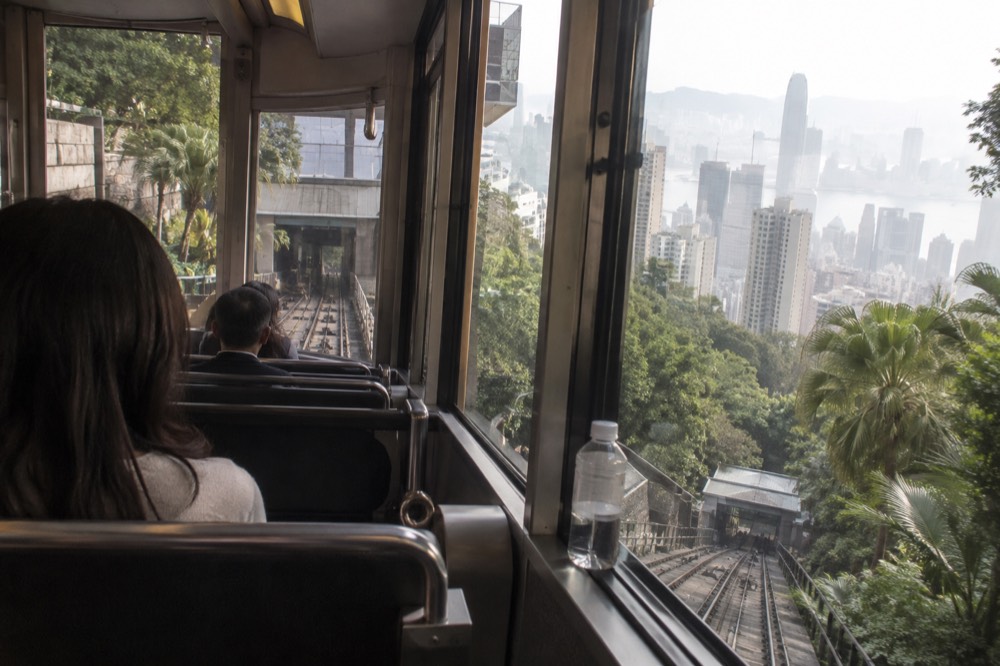
Both sides of the current tramcars have large panoramic windows, so no seat is walled in. The Victoria Harbour skyline lies to the north of the line, which means the harbour appears through the right-hand windows on the uphill run and the left-hand windows on the way down. Many guest reviews name the right side going up as the one to aim for.
That preference is visitor opinion rather than an official claim, and the operator publishes no seating advice, so treat it as a tip rather than a rule. The honest way to plan it is by geography rather than by seat number. On the climb out of Central the car passes close to apartment towers on both sides, and the buildings of Mid-Levels slide past at angles that get stranger as the gradient steepens. The harbour opens up progressively as the car gains height, and by the upper half of the run the view through the harbour-side windows takes in the whole northern shore, from Kowloon across to the eastern approaches. The hill-side windows show the towers clinging to the slope, which is its own spectacle and the source of the leaning illusion described below.
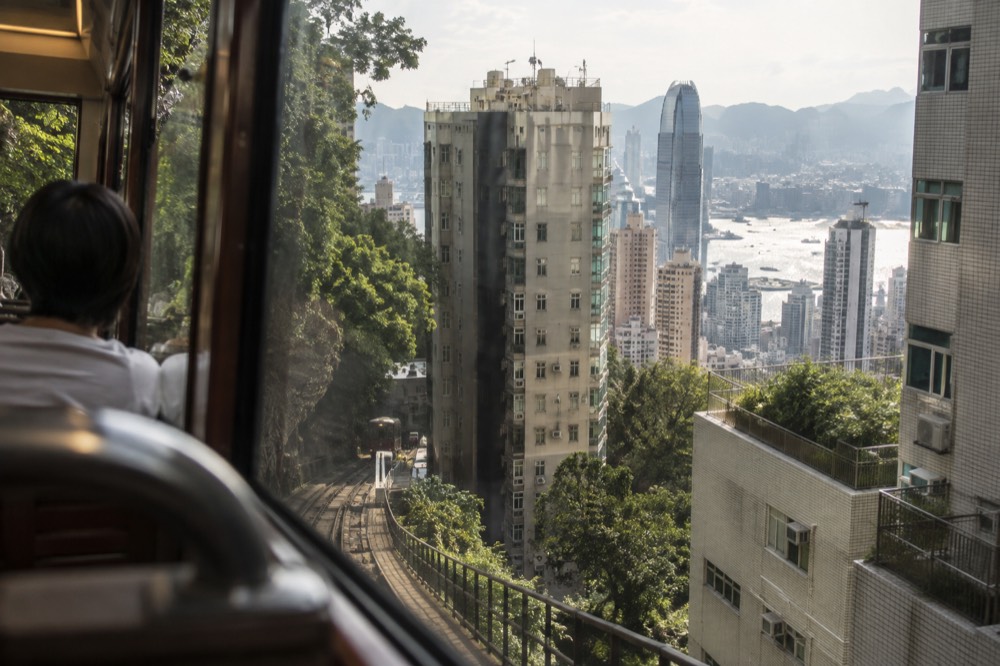
You do not choose a seat in the way you would on a train with reservations. Boarding follows the operator's queue arrangement on the day, and where you stand or sit depends on how full the car is. The 210-passenger capacity breaks down as 167 seated and 43 standing, and the floor carries a unique waveform design for standing passengers, which is worth knowing if you end up on your feet: the angled floor sections give standing riders something to brace against on the steeper sections. The question of how often cars depart is a separate one, covered in how often the Peak Tram runs.
If the ride is the part you are most curious about rather than the deck at the top, the tram-only options on the featured listing are the cheapest way to buy it. Check availability on the live listing, and read the option names carefully: anything without "Sky Terrace 428" in the name carries no deck admission.
Why do the buildings look like they are leaning?
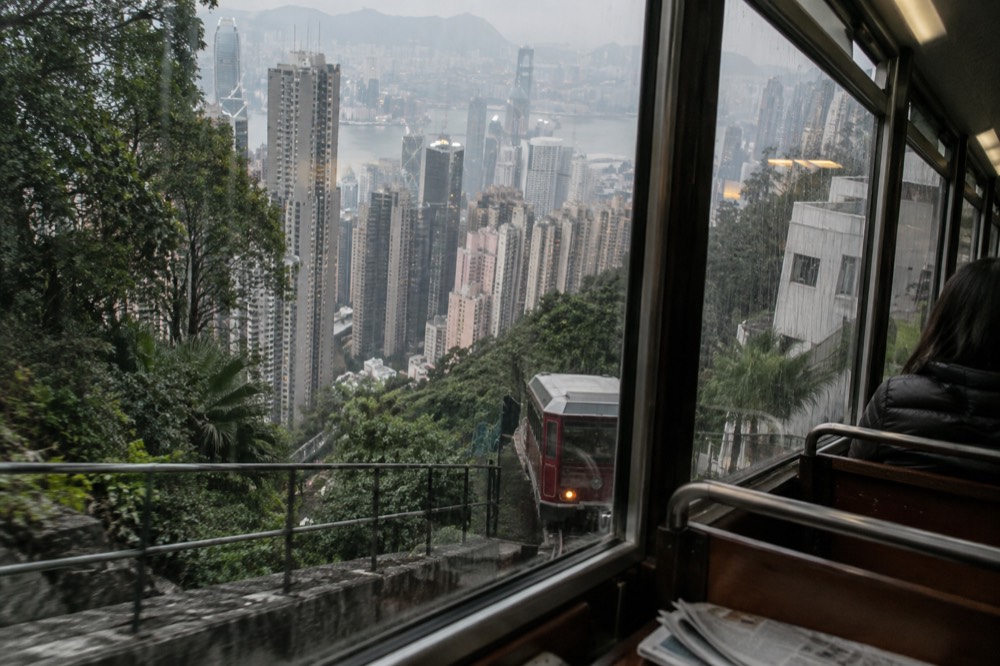
The leaning effect is a documented visual illusion. The operator's own page cites a study by The University of Hong Kong, published in the journal Psychological Science in 2013, which found that passengers riding uphill perceive the high-rises to the right of the tram as leaning toward the Peak. The buildings are upright; the illusion comes from the tilt of the car combined with the way the eye reads the scene.
This is the detail almost every rider notices and almost nobody can explain. As the gradient steepens toward the section below May Road, the car tilts back and the towers beside the track appear to tip forward, as though the whole hillside were about to slide into the harbour. The University of Hong Kong study is the published explanation, and the operator reproduces its finding on its own ride page, which is the source used here. The effect reverses on the downhill run, where the same buildings appear to lean the other way.
A practical note for photographers: the operator prohibits tripods and lighting equipment in the Peak Tram, in The Peak Tower and on Sky Terrace 428, and drones are prohibited on Peak Tram and Peak Tower property without management permission. Photography pages sometimes recommend a tripod for the night skyline from the deck, and the operator's own rules say no. Handheld shots from the moving car are workable in daylight, and free Wi-Fi is available at both termini, in The Peak Tower and on Sky Terrace 428 if you want to upload on arrival.
What are the intermediate stations?
The line historically connected five intermediate stations, and the modern route still serves intermediate stops along the alignment, including Barker Road and May Road. These are not tourist stops: they exist for residents of the hillside, and a standard visitor ticket rides past them without stopping unless someone is waiting on the platform.
The stations are the reason the tram is a working commuter line as well as an attraction, and they explain a quirk of the fare system. An Octopus card can be used to pay on board the tram at the intermediate stations, and to buy a ticket at the counter, but it cannot be used for direct entry at the admission gate. That three-part answer is published in the operator's FAQ and is worth knowing before you assume a tap at the gate will work, the way it does on the MTR. The full breakdown is in using an Octopus card on the Peak Tram.
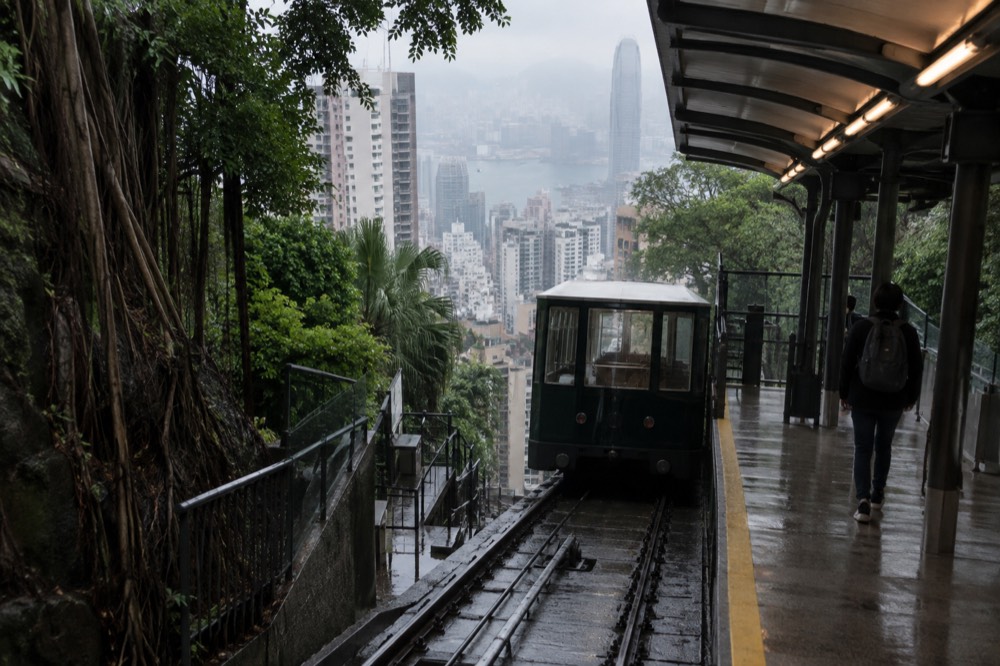
Barker Road Station sits on the upper part of the line and is the stop the operator names in its own notices about the hillside. May Road is the station associated with the steepest stretch of track, where the gradient reaches 25.7 degrees just below it. Kennedy Road is the reason the whole alignment was raised over the years, to give the car headroom where the line crosses above the road of the same name. Riding past these platforms is part of the experience: the car decelerates, the platform slides by close enough to touch, and the driver's cab announcements mark each one.
What changed in the 2022 rebuild?
The sixth-generation Peak Tram entered service in August 2022 after a project that replaced all haulage, control and signalling systems, laid new track rails, strengthened the foundations, refurbished both termini with enhanced queuing capacity and delivered new tramcars. Capacity rose 75 per cent, from 120 passengers to 210, and the rebuild brought wider doors, step-free access and larger panoramic windows.
The capacity number is the cleanest way to tell whether an article about the tram is current. The widely repeated figure of 120 passengers belongs to the fifth generation, which arrived in 1989 after a HK$60-million overhaul and was reopened by Governor Sir David Wilson on 20 September 1989. That system left service in 2021, and anything describing 120-seat cars, the old termini or the old queuing layout is describing a ride that no longer exists. The current cars are manufactured in Switzerland by Garaventa, CWA and Frey, and the operator gives the capacity split as 167 seated and 43 standing.
| Generation | Arrived | Capacity | Note |
|---|---|---|---|
| First | 30 May 1888 | 30 cents first class / 20 second / 10 third | Opened by Governor Sir William Des Voeux |
| Electric haulage | 1926 | 52 | Coal-fired steam boilers retired |
| Fifth | 20 September 1989 | 120 | HK$60-million overhaul, microprocessor drive |
| Sixth | August 2022 | 210 | New cars, rails, haulage and termini |
Safety is the question the nervous rider actually asks, and the operator publishes a concrete answer. The tram has four braking systems: Normal Stop, Service Stop, Emergency Stop, and a fourth fitted on the tramcars themselves. Step-free access for persons with a disability was added in the 2022 rebuild, and it is the one accessibility fact about the trip that is genuinely verified. No accessibility claim is made here for the walking routes at the top, because no official source states one.
What are the rules on board?
Baby strollers must be folded before entering the tram and must not exceed 26 inches, or 66 cm, in width when folded. Pets are not allowed on the tram except qualified guide dogs, even though leashed or strollered pets are allowed inside The Peak Tower. There is no luggage storage at either tram station or in the tower, and no car park in The Peak Tower itself.
The stroller width limit is the sort of published detail a family reader searches for and never finds, so it is worth repeating plainly: fold it, and check it is 66 cm or narrower folded. The pet split catches people out in the other direction, because a dog that can ride the elevator up The Peak Tower cannot ride the funicular. The luggage point decides trip logistics: there is nowhere to leave a suitcase at either end, which matters for anyone routing the Peak between a hotel checkout and a flight.
| Rule | What the operator publishes |
|---|---|
| Strollers | Must be folded before boarding, maximum 26 inches / 66 cm folded width |
| Pets | Not allowed on the tram except qualified guide dogs |
| Tripods and lighting | Not allowed in the tram, The Peak Tower or Sky Terrace 428 |
| Drones | Prohibited without management permission |
| Octopus at the gate | Not accepted for direct entry; accepted at the counter and on board at intermediate stations |
| Luggage | No storage at the tram stations or in The Peak Tower |
The hours are the other planning fact that catches visitors. The tram runs 7:30 am to 11 pm every day including public holidays, and The Peak Tower is open 7 am to 11 pm, but Sky Terrace 428 only opens at 8:30 am and closes at 10 pm. A rider on the first tram of the day arrives at the top a full hour before the deck opens, and the deck also shuts an hour before the tram does. The tram's published enquiry number is (852) 2522 0922, and the current hours are tracked in the Peak Tram hours and timetable guide.
| What | Opens | Closes |
|---|---|---|
| Peak Tram, both termini | 7:30 am | 11 pm |
| The Peak Tower | 7 am | 11 pm |
| Sky Terrace 428 | 8:30 am | 10 pm |
Is the ride itself the attraction, or just the transport?
The ride is a genuine attraction in its own right: a vintage alignment dating to 1888, a maximum gradient of 25.7 degrees, a documented visual illusion and a six-minute climb through some of the densest hillside cityscape anywhere. But it is also just transport, and the view from the top does not require it: the road and the free viewpoints cost a fraction of the tram or nothing at all.
The numbers make the comparison concrete. Citybus route 15 costs HK$13.00 for the full adult route from Central to the Peak, green minibus route 1 costs HK$11.80, and the free viewing deck at the Peak Galleria costs nothing. That framing is the honest one, and it is what separates a useful page from a sales page. The tram is the historic, atmospheric way up, and for many visitors the six minutes are the memory they keep. The bus is the cheaper way, the minibus is the cheapest published fare of all, and the top itself has free ground: the Peak Galleria rooftop deck, Lugard Road, Harlech Road and Victoria Peak Garden all cost nothing. The tourism board says so in plain words about the Galleria, calling its rooftop "a free viewing deck" with "panoramic views of Hong Kong's skyline, Victoria Harbour and beyond".
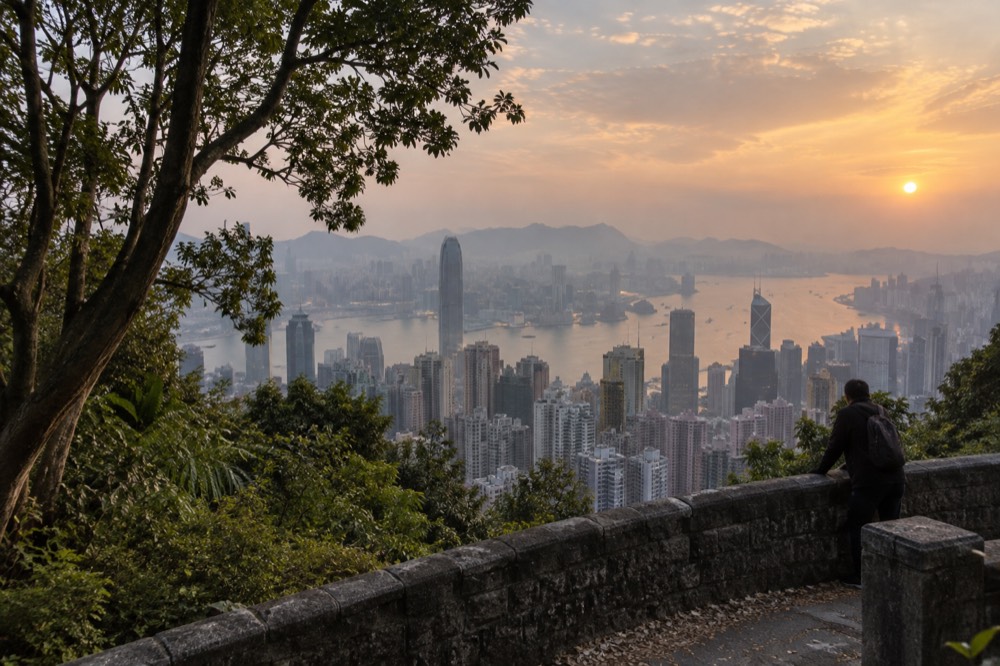
Weather decides more than timing does. The Hong Kong Observatory's 30-year normals show October as the clearest month, with 55 per cent of possible bright sunshine and no normal fog days, while March is the murkiest, with 27 per cent sunshine, 77 per cent cloud and 1.47 mean days of visibility under one kilometre. Those are Hong Kong-wide figures, not Peak measurements, and the operator itself tells visitors to check the Observatory's two Victoria Peak webcams before travelling. The month-by-month detail is in the best time to visit the Peak.
There is one closure rule that overrides all planning: when a tropical cyclone warning signal no. 8 or above, or a special inclement weather warning, is hoisted, the Peak Tram and Sky Terrace 428 close. The road services keep running, which is when the bus fares above stop being trivia and become the way home. The operator's own FAQ states the rule, and it is the one closure fact safe to write into a permanent page.
What happens at the top of the ride?
The Peak Terminus sits inside The Peak Tower at Victoria Gap, 396 metres above sea level. The tower does not stand on the summit of Victoria Peak, which is 552 metres and closed to the public; it sits in the dip between the hills, and its roof deck, Sky Terrace 428, is at 428 metres. Entering the tower building costs nothing, and the shops and restaurants inside are free to walk into.
The operator is unusually direct about the geography: its own history page says the tower "does not sit atop Victoria Peak but is situated in Victoria Gap, a dip along the line of the hills at an elevation of 396 metres". The paid part of the building is the deck on the roof. The operator describes Sky Terrace 428 as "the highest observation deck in Hong Kong", and that is an operator claim, quoted as one rather than asserted here. The true summit, at 552 metres, is occupied by a radio installation and closed to visitors, while the free public park at Victoria Peak Garden stands at 554 metres, which makes it the highest ground at the Peak a visitor can freely stand on.
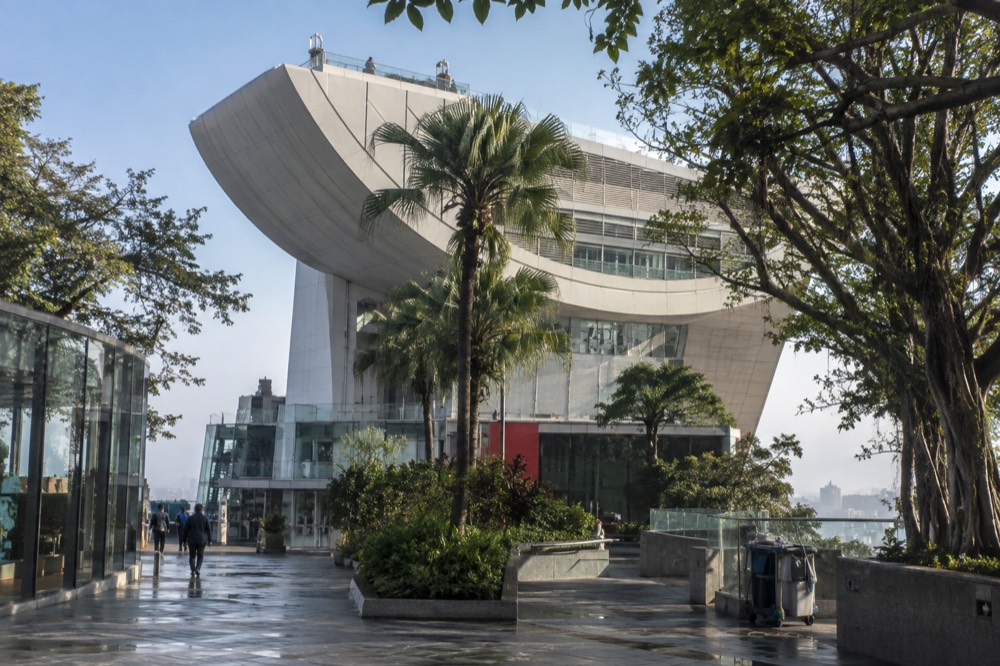
From the terminus the choices fan out. Mount Austin Road starts beside The Peak Tower and leads uphill to Victoria Peak Garden, a walk the operator publishes at 30 to 40 minutes. The Hong Kong Trail loop runs out along Lugard Road and back by Harlech Road, 40 to 60 minutes on the operator's own timing, and the tourism board grades the full Peak Circle Walk as easy, 3.5 km, "can be completed in an hour". Madame Tussauds Hong Kong is inside The Peak Tower, MONOPOLY DREAMS is over at the Peak Galleria, and the restaurants the operator names inside the tower include Bubba Gump Shrimp Co., Lavache and Petit Jardin. What to do with the hours you have is its own question, covered in things to do at the Peak.
If the combination of ride and rooftop view is what you came for, the round-trip combo option is the one most visitors actually want, and the operator's own pricing says so. Compare the options on the live listing before you commit to a tram-only ticket.
Deciding between the paid deck and the free viewpoints is a fair question, and the answer is that they are different products rather than better and worse versions of one another. The paid ticket buys the operator's 360-degree deck at 428 metres on the tower roof; the free ground buys the same skyline from the hillside roads and the Galleria rooftop, at heights the operator itself publishes as higher for the garden. Some readers weigh the deck against the harbour-level observation deck across town, a comparison worked through in Sky Terrace 428 or Sky100. Whatever you choose, the ride up is the part no bus can replicate, and this site, Victoria Peak Hong Kong, exists to help you buy it with the facts rather than the marketing.
Common questions about the Peak Tram ride
How long is the Peak Tram ride?
Approximately six minutes one way, on 1,278 metres of track between the Central Terminus at 33 metres above sea level and the Peak Terminus at 396 metres. The operator publishes the journey time and the track length on the same page. The full timing picture, including hours and how the deck's shorter opening day affects planning, is in the ride-length breakdown.
Which side of the Peak Tram has the best view?
Both sides have large panoramic windows on the current cars. The harbour lies to the north of the line, so it appears on the right going up and the left coming down. Many guest reviews prefer the right side uphill, but that is visitor opinion, not an official claim, and the operator publishes no seating advice.
Why do the buildings look like they are leaning during the ride?
It is a documented visual illusion. A study by The University of Hong Kong, published in Psychological Science in 2013, found that passengers riding uphill perceive the high-rises beside the tram as leaning toward the Peak. The buildings are upright; the tilt of the car and the viewing geometry produce the effect.
Does the Peak Tram stop at intermediate stations?
Yes, the line serves intermediate stops along the alignment, including Barker Road and May Road. They exist for hillside residents rather than tourists, and a standard visitor ticket rides through unless someone is waiting on the platform. An Octopus card can pay on board at those stations but cannot be used for direct entry at the gate.
Is the current Peak Tram the same one described in older articles?
No. The sixth-generation system entered service in August 2022, with new tramcars, rails, haulage and rebuilt termini, and capacity rose from 120 to 210 passengers. Anything describing 120-seat cars or the pre-2022 termini describes a retired system.
Can I take a stroller or a pet on the Peak Tram?
Strollers must be folded before entering and must not exceed 26 inches, or 66 cm, in width when folded. Pets are not allowed on the tram except qualified guide dogs, even though leashed or strollered pets are allowed inside The Peak Tower.