How long is the wait for the Victoria Peak tram?
No official source publishes a Peak Tram wait time for any hour or season. Here is what the operator does publish: what a pre-purchased ticket skips, what it does not, and how to plan around the boarding queue.
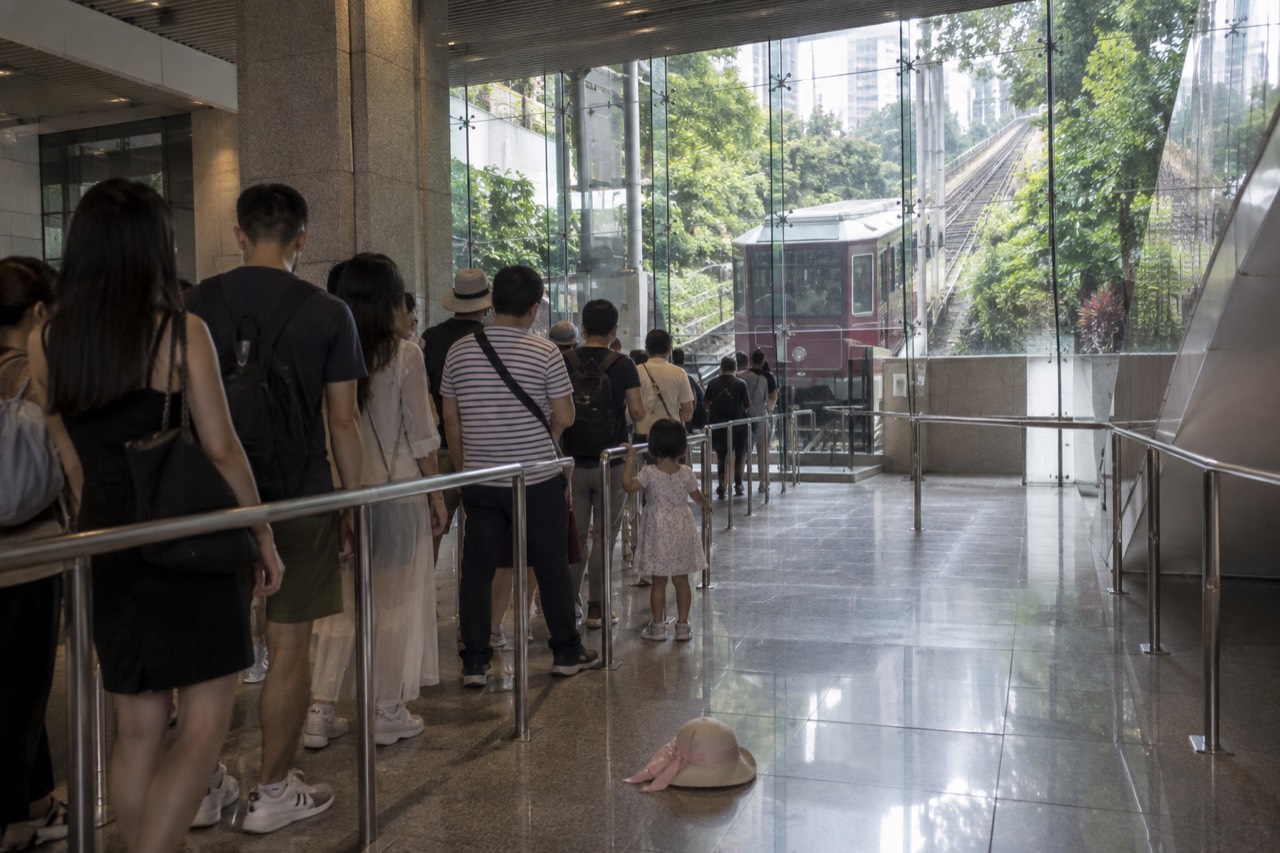
How long is the wait for the Victoria Peak tram?
No published figure exists. Neither the tram operator, nor the Hong Kong Transport Department, nor the Hong Kong Tourism Board publishes a wait time for the Peak Tram, for any hour of any day or any season. The operator's own position is that "the queueing time will depend on the number of visitors on the day." Any website that prints a number in minutes is inventing it, and this page will not do that.
That blank space is frustrating, but it is also the honest starting point. What can be reported is the structure around the queue: which line a pre-purchased ticket removes, which line it cannot touch, what the operator says about its timed tickets, and what the published alternatives cost on a day when the boarding line looks long. Each of those is documented, and each one changes how a visitor should plan the trip.
The operator's own FAQ is the source of record here. It states that timed tickets "are designed to help manage the flow of visitors, but they do not provide priority boarding", and that queueing time depends on visitor numbers on the day, in the words quoted above from the operator's FAQ page. That is a deliberate, published choice of words, and it is worth reading closely: the operator sells timed tickets, and still declines to promise anything about boarding order.
One more structural fact matters before anything else. The Peak Tram that queues at Garden Road is a funicular between the Central Terminus at 33 metres above sea level and the Peak Terminus at 396 metres, running on 1,278 metres of track. It is not the double-decker street tram on Hong Kong Island, which runs on the flat and never goes up the hill. Visitors mix the two systems up constantly, and the queue advice for one is meaningless for the other. The street tram is a flat-city service with its own fares and its own crowds, and it never appears in a Peak Tram queue, a Peak Tram timetable or a Peak Tram ticket option.
What does buying a ticket in advance actually skip?
A ticket bought ahead puts the holder in the "Pre-purchased Ticket Holder" queue, which removes the ticket-buying line at the counter. It does not remove the boarding line for the tramcar itself. The listing's own redemption text says to line up at that queue and present an e-voucher QR code at the admission gate, and adds that boarding is subject to the queueing arrangement of the tram operator and the tower operator.
That is the whole distinction, and almost every competing page flattens it into "skip the line", which is simply false for this product. There are two lines at the Central Terminus: the line to buy a ticket, and the line to board. Pre-purchase eliminates the first one completely, because there is nothing left to buy. The second line is where everyone stands, ticket or no ticket, and the operator's published position is that timed tickets do not provide priority boarding within it.
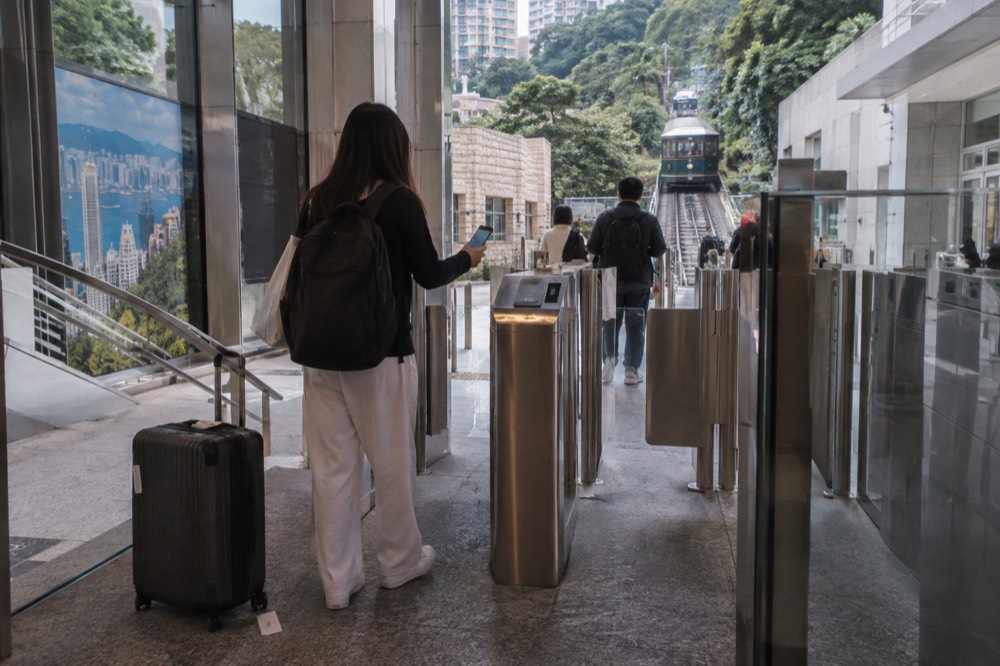
The practical reading is straightforward. On a quiet day, the ticket-counter line is short and buying at the gate costs little extra time. On a busy day, the counter line is the long one, and a pre-purchased QR code walks straight past it. What no ticket at the standard price does is jump the boarding queue, and the operator says so itself rather than burying it. For a fuller treatment of the ride itself, the timing and the gradient, see the companion piece on how long the tram ride takes.
The supplier named on the listing is Peak Tramways Co Ltd. and The Peak Tower Ltd., which is worth knowing because it means the queue rules come from the attraction's operator, not from a reseller. The e-voucher is scanned at the gate with no separate redemption step, on a phone or on paper, and the operator publishes a small practical detail that suggests how to make the scan work first time: screen brightness up, and about 2 to 3 cm between the screen and the sensor.
One payment detail belongs here too, because it changes which line a visitor joins. An Octopus card cannot be used for direct entry at the admission gate, so a card holder cannot bypass the counter the way an e-voucher holder can. The card can be used to buy a ticket at the counter, and to pay on board at the intermediate stations, but the gate itself wants a QR code or a paper ticket. Forum advice that says "just tap your Octopus" is wrong at the one point that matters for queueing.
Is the Peak Tram a skip-the-line ticket?
No. The featured ticket is a standard admission product, and both the seller's redemption text and the operator's FAQ say so independently. The seller's text puts holders in the "Pre-purchased Ticket Holder" queue; the operator states that timed tickets do not provide priority boarding. A genuinely different fast-track product exists as a separate listing, with its own price and its own reviews, and it is not this one.
The confusion is understandable because the two listings look almost identical in a search result. One is the standard ticket described above. The other is a fast-track product that costs more and promises what the standard one cannot. A visitor who buys the cheap listing expecting queue priority, or buys the dear one expecting the ordinary ticket, has been misled by whichever page failed to draw the line between them.
There is one exception inside the standard listing itself. Priority access exists only in the Ruby Pass option, whose redemption text is different: scan the QR code at the Ruby Pass access points for quicker entry. The operator's own equivalent, the Peak Tram Ruby Special, is published at HK$342 for an adult and HK$222 for a child aged 3 to 11, a senior 65 or above, or a concession holder, and is described by the operator as priority exclusive access with a daily limited quota. So the honest answer to "can I pay to skip the boarding line" is yes, at a specific published price, in a specific product, and not in the cheap one. The site's own write-up of that trade-off is whether the Ruby Pass is worth it.
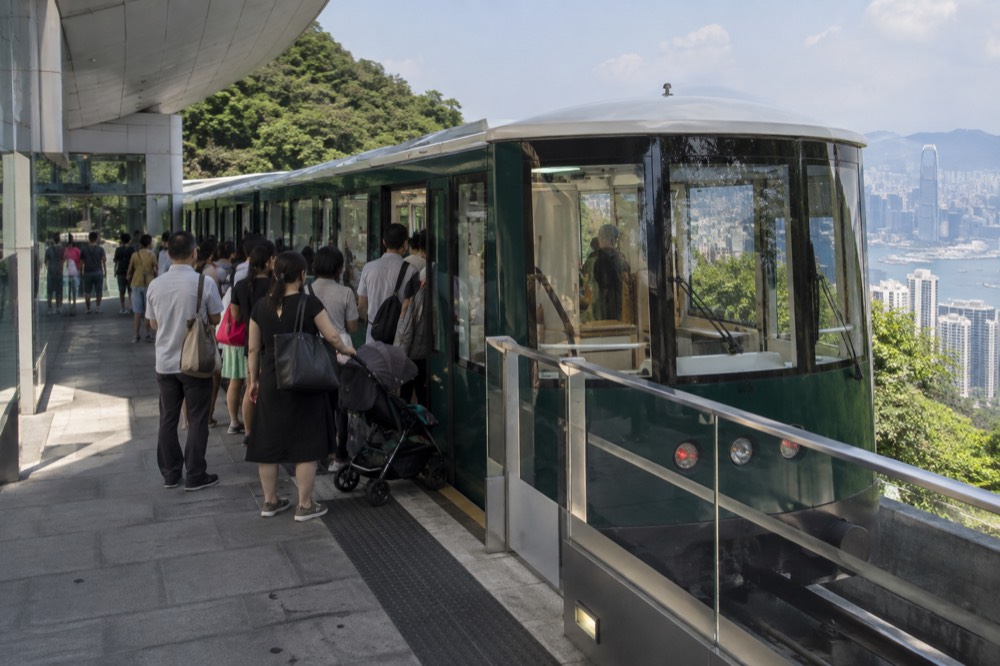
It also helps to know what is being queued for. The tramcars in service since the August 2022 rebuild carry 210 passengers each, up 75 per cent from the 120 of the retired fifth generation, with 167 seated and 43 standing places. The rebuild also refurbished both termini, which the operator says brought enhanced queuing capacity. Any page describing a 120-passenger car or an old terminus layout is describing a system that went out of service in 2021, and its queue advice went with it.
When is the Peak Tram busiest?
The only official crowd-timing guidance that exists anywhere is one sentence from the operator: during public holidays or festive seasons crowd control management will be implemented, and visitors are encouraged to purchase tickets in advance and come before 3pm during non-peak hours. No visitor-number statistic for the Peak is published, no month-by-month crowding data exists, and no source gives a quiet hour.
That sentence deserves to be quoted in full because it is the entire published basis for every timing decision. The operator does not say which days count as festive, does not rank the seasons, and does not publish a calendar of expected crowds. What it does say is that tickets bought ahead are its own recommendation on busy days, and that arriving before 3pm outside peak periods is its suggested pattern. A reader who wants the operating hours behind that advice can find them in the guide to Peak Tram hours and the timetable.
| Published fact | What it means for the queue | Source |
|---|---|---|
| "Come before 3pm during non-peak hours" | The operator's only timing advice, tied to non-peak periods | Operator FAQ |
| "Crowd control management will be implemented" on holidays and festive seasons | Busy days are managed, not eliminated, and no duration is given | Operator FAQ |
| Tram capacity is 210 per car, up from 120 | More people per departure since the 2022 rebuild | Operator history page |
| Queueing time "will depend on the number of visitors on the day" | The operator declines to publish any wait figure | Operator FAQ |
| Tickets sold for same-day visits and up to 30 days ahead, 10 per ticket type per transaction | The booking window and the per-order cap are both published | Operator FAQ |
Weather is the other published input, and it is a real one. The Hong Kong Observatory's 30-year normals, recorded city-wide rather than on the Peak itself, show October as the clearest month of the year with 55 per cent of possible bright sunshine and 58 per cent mean cloud, and March as the murkiest with 27 per cent sunshine, 77 per cent cloud and 1.47 mean days with visibility under 1,000 metres. Clear-weather months are the months when the view is worth queueing for, which is a defensible planning statement in a way that a crowd claim would not be. The operator itself points visitors at the Observatory's two Peak webcams before travelling, which is the only live visibility check any official source recommends.
There is one closure rule that can be stated permanently, because it is evergreen rather than a dated notice. When a tropical cyclone warning signal no. 8 or above, or a special inclement weather warning, is hoisted, the Peak Tram and Sky Terrace 428 close. The Observatory's own normals put the mean number of signal-8-or-above days at 0.80 in August, 0.67 in September and 0.53 in July, against nil from November through April. On such a day the queue question answers itself: the road services are how people get up and down, and the published bus and minibus fares below are the working alternatives.
How do you avoid the longest lines?
The honest alternatives are to arrive before 3pm outside peak periods, as the operator suggests, or to skip the tram in one direction entirely. The published road fares are Citybus route 15 at HK$13.00, Citybus route X15 at HK$16.80 and green minibus route 1 at HK$11.80 for the full adult route, and the minibus is the cheapest published way up the hill of any kind. Walking up is also free and real.
None of those figures is a conversion of the tram fare; they are the Transport Department's own published route fares, in the currency they are published in. What they give a reader is a genuine comparison. The operator's gate fare for the tram alone is HK$82 single and HK$116 return for an adult, so the bus and the minibus are dramatically cheaper than the ride, at the cost of the funicular experience and the gradient views.
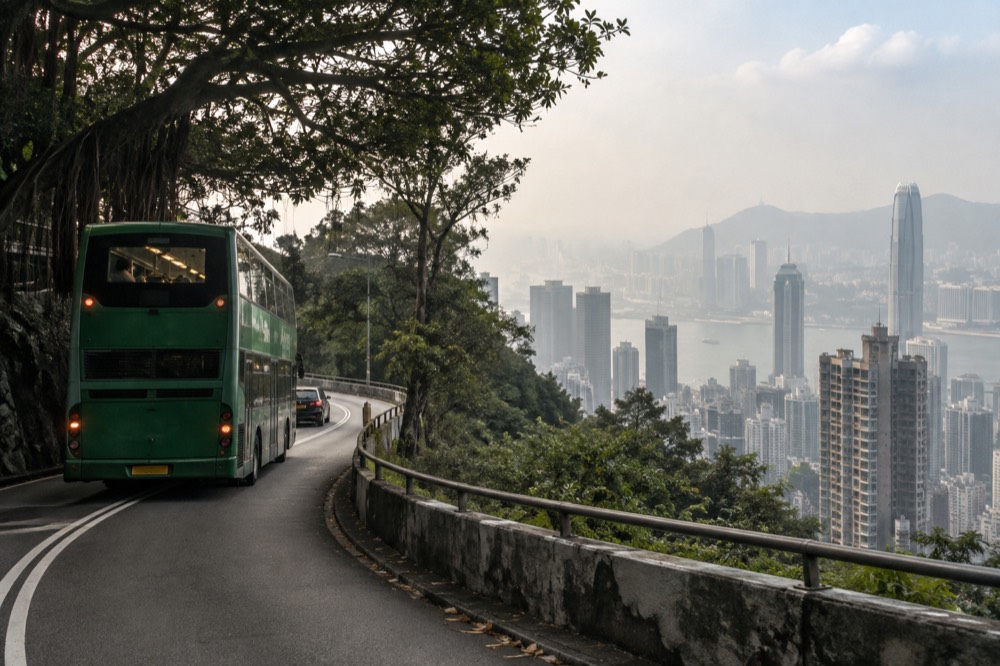
The split-day strategy is the one that answers the queue question most directly. Take the minibus or bus up, spend the afternoon at the top, and ride the tram down in the evening, or the reverse. A one-way tram ticket is a real option in the listing, priced at the operator's HK$82 adult single, so a visitor does not need to buy a return to use the tram in one direction only. On a day when the boarding line at the Central Terminus looks unattractive, the road up is not a consolation prize; it is the cheaper published route and it reaches the same terminus area at the Peak.
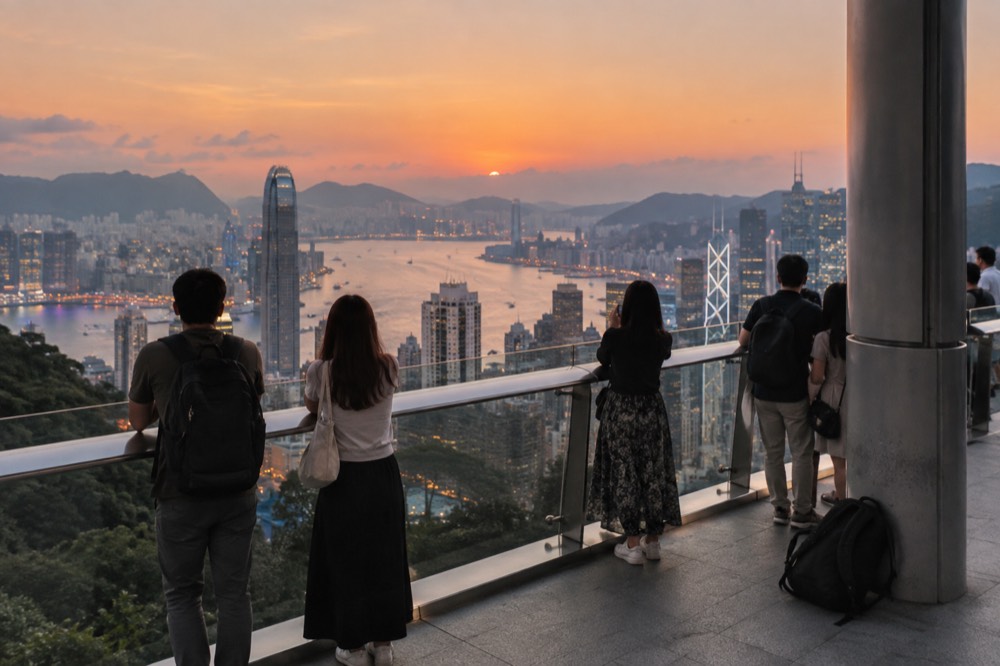
There is also the free option, which this site does not bury. Walking up from Mid-Levels via Old Peak Road is a real, locatable route, and once at the top the views do not require any ticket at all: the Peak Galleria rooftop viewing deck is free, and the tourism board says so in its own words, recommending visitors head to the rooftop for panoramic views of the skyline and Victoria Harbour. The full picture of what costs nothing up there is in the guide to the free deck at the Peak Galleria.
What does the tram cost, and what does the cheapest ticket include?
The headline from-price of $10.59 buys one adult, one-way tram ride, tram only, with no Sky Terrace 428 admission and no ride back down. The operator's own gate fares are HK$82 for that adult single and HK$116 for the return, and the combination with the deck is materially dearer at HK$146 single and HK$182 return.
The from-price trap is the single most common error in coverage of this product. The figure matches the operator's HK$82 adult single exactly, which is precisely how it can be identified as tram-only: if it included the deck it would not line up with the tram-only fare. The listing is not one ticket but a menu of options, including round-trip tram, deck admission alone, and the tram-plus-deck combinations, and the price range across the listing runs from $10.59 to $38.79 in the US locale.
| Ticket, adult, operator's published gate fares | Single | Return |
|---|---|---|
| Peak Tram only | HK$82 | HK$116 |
| Peak Tram plus Sky Terrace 428 (Special Combo) | HK$146 | HK$182 |
| Sky Terrace 428 admission alone | HK$80 | not sold as a return |
| Peak Tram Ruby Special (priority access, daily limited quota) | HK$342 | not sold as a return |
Two published notes complete the picture. The operator states that the combo saving cannot be assembled by buying the parts separately: "you must select the Peak Tram Special Combo tickets to enjoy the best price." And the concession column, which drops the tram single to HK$52, is not a tourist discount; it is the rate for holders of the HKSAR Registration Card for people with Disabilities, available only when buying on arrival. A child aged 3 to 11 or a senior 65 or above also pays the concession fares, which are published on the operator's own tram and Sky Pass price page.
The hours trap sits next to the price trap. The tram starts at 7:30 am and runs to 11 pm, but Sky Terrace 428 opens only at 8:30 am and closes at 10 pm. A visitor on the first tram of the day with a combo ticket arrives a full hour before the deck opens, and the deck also shuts an hour before the tram does at night. Neither fact changes the queue, but both change what the ticket is worth on an early or late arrival, and the closing-time detail is covered in full in what time the Peak closes.
For a family, two further published rules shape the queue itself. Baby strollers must be folded before entering the tram and must not exceed 26 inches, or 66 cm, in width when folded, which means a stroller is being carried, not pushed, in the boarding line. Pets are not allowed on the tram except qualified guide dogs, though pets on a leash or in a stroller are welcome inside The Peak Tower itself. And there is no luggage storage at either tram station or in the tower, which is worth knowing before a departure day ends with a suitcase in a funicular queue.
For everything the standard ticket does and does not promise, the practical summary is on Victoria Peak Hong Kong, and the question of whether the ride justifies its price at all is weighed separately in whether the Peak Tram is worth it.
Common questions about the Peak Tram queue
How long is the wait for the Victoria Peak tram?
No official source publishes a wait time, for any hour, day or season. The operator states only that queueing time depends on the number of visitors on the day. Any specific figure in minutes that appears on another website is not sourced from the operator, the Transport Department or the tourism board.
Does buying the ticket in advance let me skip the line?
It lets you skip the ticket-buying line at the counter, by putting you in the "Pre-purchased Ticket Holder" queue with an e-voucher QR code. It does not skip the boarding line, and the operator states that its timed tickets do not provide priority boarding.
Is there a fast-track Peak Tram ticket?
Yes, but it is a separate product with its own price and reviews, not the standard ticket. Within the standard listing, priority access exists only in the Ruby Pass option, which the operator prices at HK$342 for an adult and describes as priority exclusive access with a daily limited quota.
When does the operator say to come?
Its only published guidance is to purchase tickets in advance and come before 3pm during non-peak hours, with crowd control management implemented on public holidays and festive seasons. No quiet hour or busy-day calendar is published.
What is the cheapest way up if the queue looks long?
Green minibus route 1 costs HK$11.80 for the full adult route, Citybus route 15 costs HK$13.00 and Citybus route X15 costs HK$16.80, all published by the Transport Department. Walking up is free, and the Peak Galleria rooftop viewing deck at the top is free too.
Does the $10.59 ticket include the Sky Terrace 428 deck?
No. That price buys one adult, one-way tram ride only. The operator's gate fare for the tram plus Sky Terrace 428 is HK$146 single or HK$182 return, and the operator says the combo price cannot be assembled by buying the parts separately.