Is Victoria Peak worth going?
A straight verdict on Victoria Peak: what the view delivers, what the crowds and ticket prices cost you, who should go and who should skip it.
Is Victoria Peak worth going?
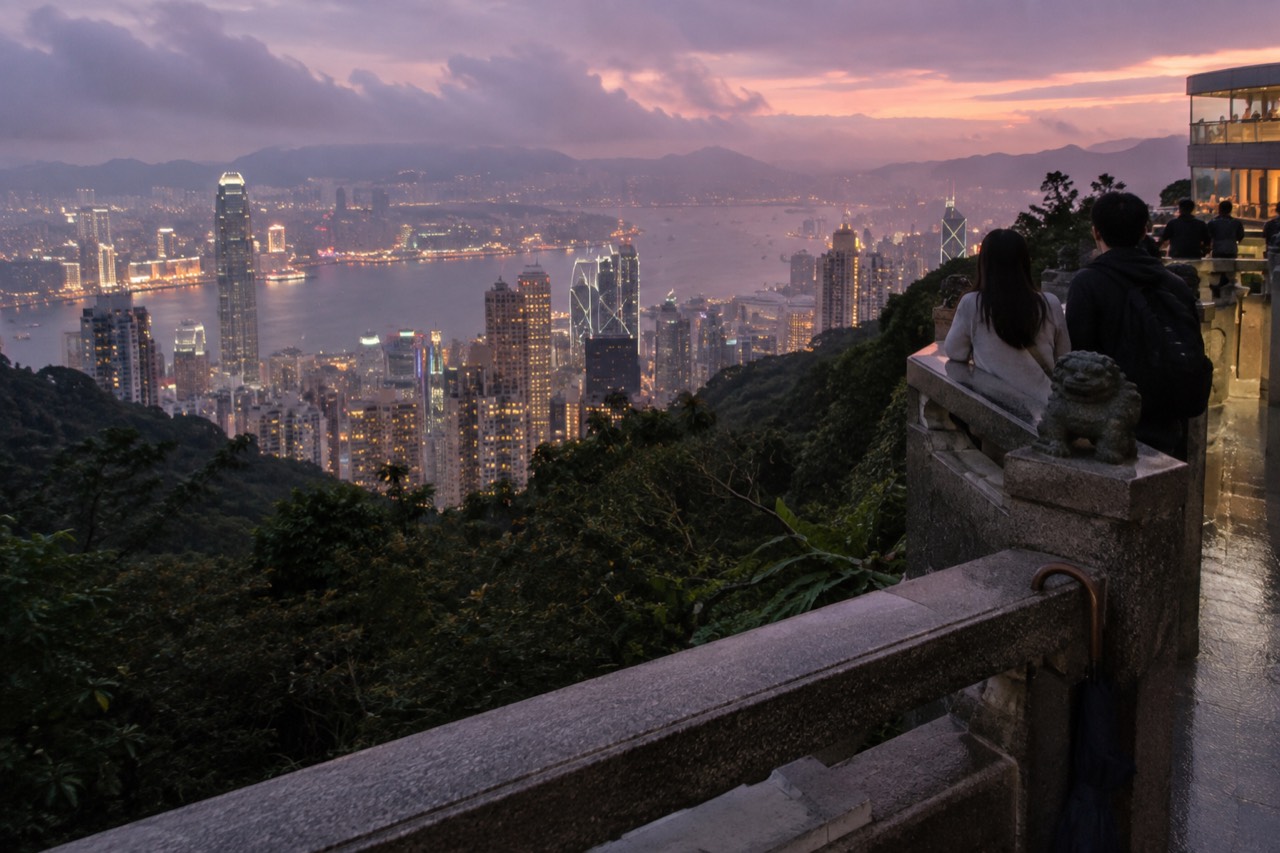
Yes, for almost everyone, and the reason is simple: the panorama across Victoria Harbour and the dense towers below is one of the most recognisable city views on earth, and the ground it is seen from is free to stand on. The paid parts, the tram ride and the Sky Terrace 428 deck, are optional add-ons rather than the point of the trip. Anyone who separates the view from the ticketing will have a good day.
That verdict needs unpacking, because the Peak is really three separate things sold as one. The first is the hill itself, a public place with roads, gardens and lookout points that cost nothing to walk. The second is the Peak Tram, a funicular that has run since 30 May 1888 and charges HK$82 for an adult single ride at the operator's published gate fare. The third is Sky Terrace 428, the paid observation deck on the roof of The Peak Tower, at 428 metres above sea level. Confusing the three is how visitors end up paying for things they did not want, or feeling cheated by things they were never sold.
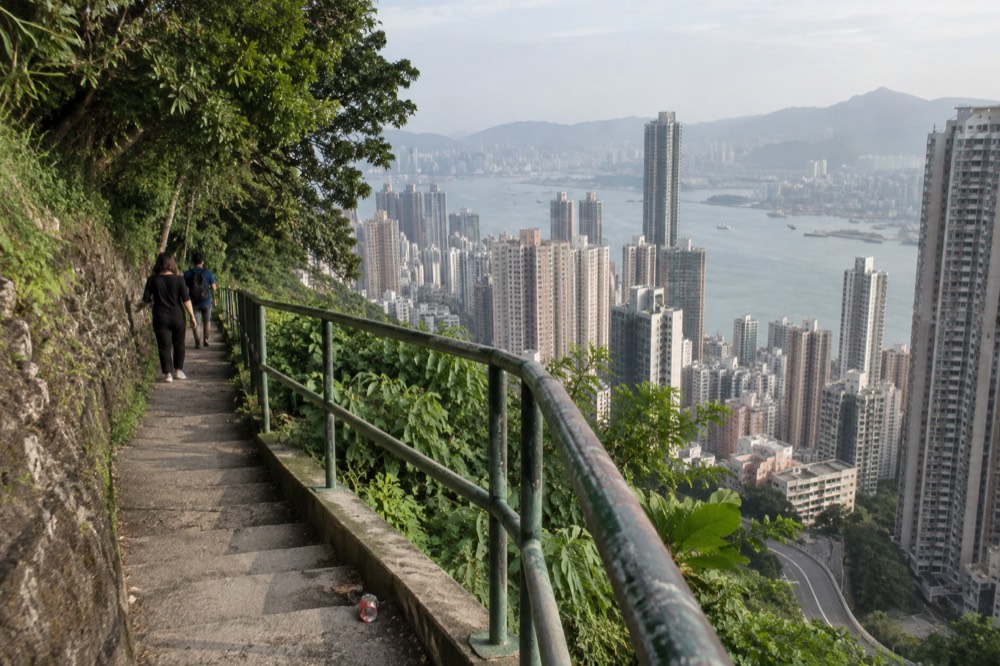
One correction matters before anything else, because it changes what "going to the Peak" means. The Peak Tower does not stand on the summit. The operator itself states the tower "does not sit atop Victoria Peak but is situated in Victoria Gap, a dip along the line of the hills at an elevation of 396 metres". The true summit, at 552 metres, is the highest point on Hong Kong Island, and it is closed to the public, occupied by a radio installation. The highest ground a visitor can freely stand on is Victoria Peak Garden, a free public park the operator publishes at 554 metres. So the trip is not about reaching the top of anything. It is about a spectacular vantage point over one of the world's most vertical cities, and that vantage point is generous with free access.
For readers who want the ride and the deck, the ticketing is a menu rather than a single product. The featured listing, The Peak Tram Ticket in Hong Kong, carries separate options, and the operator's own gate fares show what each level costs.
| Option | What it buys | Operator's adult gate fare |
|---|---|---|
| One-way Peak Tram | A single tram ride, no deck admission | HK$82 |
| Round-trip Peak Tram | Both rides, no deck admission | HK$116 |
| Sky Terrace 428 alone | Deck admission only, no tram | HK$80 |
| One-way tram + deck | One ride plus deck admission | HK$146 |
| Round-trip tram + deck | Both rides plus deck admission | HK$182 |
The headline from-price of $10.59 on the live listing is the one-way, tram-only, adult option. It does not include Sky Terrace 428, and it does not include the ride back down. Anyone budgeting for "the Peak" on that number alone is budgeting for a fraction of the trip.
What the view actually delivers
The view delivers the full sweep of Victoria Harbour, the Kowloon peninsula behind it, and a wall of high-rises climbing the hillside directly below, and the tourism board recommends free spots to see it from. Lugard Road is called a great place for sunset and night views, and the Lugard Road Lookout is described as one of the city's best-kept secrets. The paid deck adds height, not a different city.
The honest three-way split is this, and each part is separately sourced. The panoramic view from the top of the hill is free at the Peak Galleria rooftop deck, which the Hong Kong Tourism Board describes plainly as "a free viewing deck" with panoramic views of the skyline and harbour. What the Sky Terrace 428 ticket buys is the extra height at 428 metres on the Peak Tower roof, plus what the operator calls "the highest observation deck in Hong Kong", a claim we attribute to the operator rather than assert. What the tram ticket buys is the ride itself, roughly 6 minutes each way on a line that climbs from 33 metres at the Central Terminus to 396 metres at the top.
That split is the whole verdict in miniature. A visitor who takes the minibus up, walks Lugard Road, and stands on the free Galleria rooftop has seen the city. A visitor who adds the tram has had a historic funicular ride, an experience in its own right with a story that goes back to a Scotsman named Alexander Findlay Smith, who petitioned the governor in May 1881 for permission to run tram routes. A visitor who adds Sky Terrace 428 has bought height and a 360-degree platform. None of those purchases is wasted, but only the first one is necessary.
The tower itself is worth a look even without a deck ticket, because entering The Peak Tower building costs nothing. The shops, the restaurants and the indoor views are free to walk into. Madame Tussauds Hong Kong is inside the tower, and MONOPOLY DREAMS sits over in the neighbouring Peak Galleria, which the tourism board calls "the world's first ever MONOPOLY-themed attraction". Visitors mix the two buildings up constantly, and the split matters for anyone planning a full day up there.
For a deeper look at the paid deck question, the Sky Terrace 428 worth-it verdict runs the numbers on the deck alone, and the guide to the Peak Galleria free deck covers the zero-cost alternative in detail.
What the crowds and queues cost you
The cost is not money but friction: the tram boarding line is not removed by buying ahead, and the operator says so explicitly, stating its timed tickets "do not provide priority boarding" and that queueing time depends on visitor numbers on the day. No published wait figure exists for any hour or season. The only official timing guidance is the operator's own advice to come before 3pm during non-peak hours.
This is the part of the Peak that disappoints people, and it disappoints them because almost every article oversells the ticket. Buying ahead removes the ticket-counter line, because a pre-purchased voucher holder walks past the counter and presents a QR code at the admission gate. It does not remove the boarding line. The operator's FAQ states this in plain words, and the listing's own redemption text says boarding is subject to the queueing arrangement of Peak Tramways Co Ltd. and The Peak Tower Ltd. Anyone promising a skip-the-line experience on the standard ticket is describing a product that does not exist.
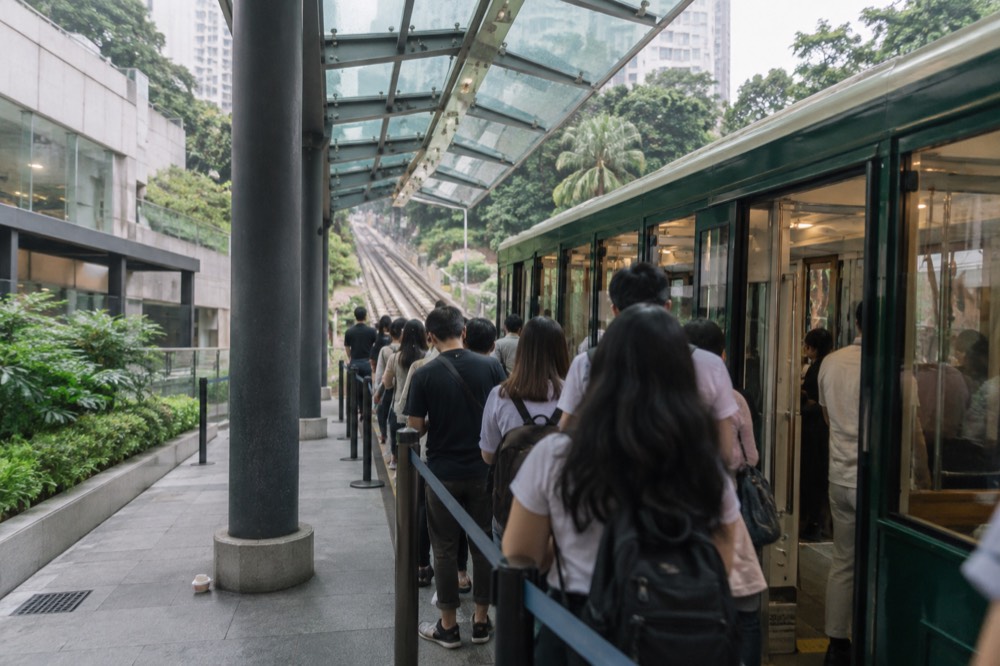
The genuine priority product is a different thing entirely, at a different price. The operator publishes the Peak Tram Ruby Special at HK$342 for an adult, described as "Priority Exclusive Access, Daily Limited Quota". Within the featured listing, priority access exists only inside the Ruby Pass option. So the answer to "can I pay to jump the queue" is yes, at a specific published price, in a specific product, and not in the cheap one. The Ruby Pass worth-it question examines whether that premium makes sense.
The queue question is answered in full, with everything that is and is not published, in how long the tram queue really is. The short version: nobody honest can print a number, and any page that does is inventing it.
There is also a timing trap that catches early birds. The tram starts at 7:30 am, but Sky Terrace 428 does not open until 8:30 am, so a visitor on the first tram of the day with a combo ticket arrives a full hour before the deck opens. The deck also closes at 10 pm, an hour before the tram and the tower shut at 11 pm. Reviewers walk into both ends of this, and no incumbent page warns about either.
The free alternatives that change the verdict
The free alternatives are real, official and numerous: the Peak Galleria rooftop viewing deck, Lugard Road, Harlech Road and Victoria Peak Garden all cost nothing, and the tourism board recommends them in its own words. Victoria Peak Garden sits at 554 metres, higher than the paid deck at 428 metres. A visitor who knows this can have a complete Peak day without buying a deck ticket at all.
Start with the Galleria, because it is the easiest win. The Hong Kong Tourism Board states the building "offers a range of shopping and dining as well as a free viewing deck", and its body text says to "head to the rooftop for panoramic views of Hong Kong's skyline, Victoria Harbour and beyond". This is a government tourism board saying, in plain words, that the view from the top of the hill does not need a ticket. The same building has a kids' playground the board recommends for families, and it holds the public car park, since The Peak Tower has none. The wider set of guides lives on Victoria Peak Hong Kong.
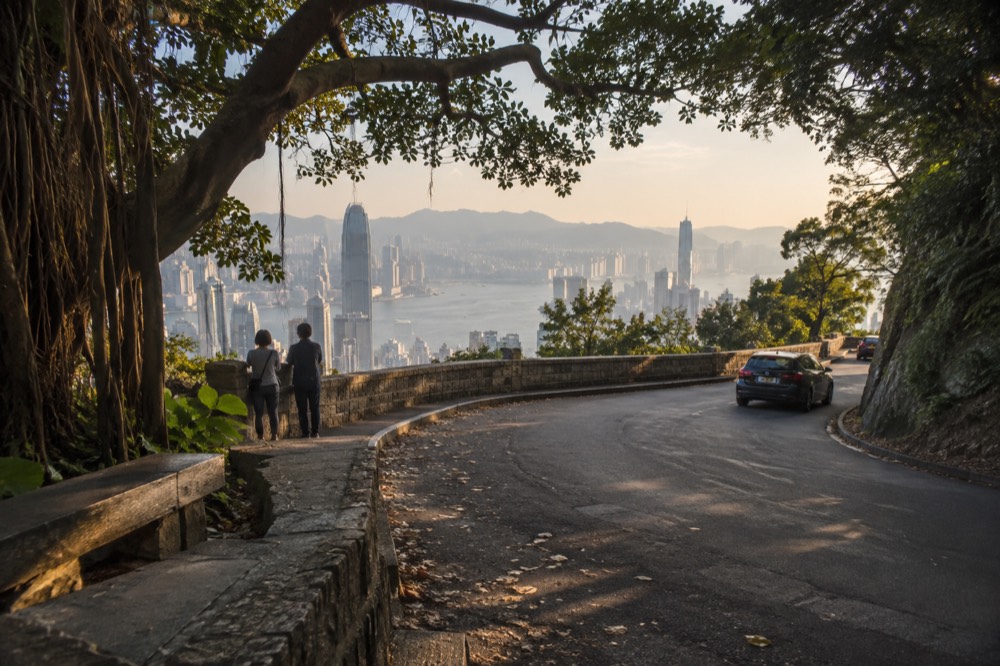
Then take the walk. Lugard Road, built between 1913 and 1914 and named for Sir Frederick Lugard, the 14th governor of Hong Kong, circles the hill on the level, and the operator's own route for the Hong Kong Trail loop runs out along Lugard Road and back by Harlech Road, timed at 40 to 60 minutes on the operator's published walk list. The tourism board grades the Peak Circle Walk as easy, 3.5 km, and says it "can be completed in an hour". Along the way are two graded historic buildings with street numbers to look for: the white Grade II building at 1 Lugard Road and the Grade I residence at 27 Lugard Road.
Uphill, Mount Austin Road runs from beside The Peak Tower up to Victoria Peak Garden, a walk the operator times at 30 to 40 minutes, with a car park and a kiosk selling snacks and drinks at the top. The tourism board describes the garden as "a hidden gem above Victoria Peak, offering stunning views, charming Victorian landscaping and a serene retreat for nature lovers". It is managed by the Leisure and Cultural Services Department, and there is even a dog garden opposite No. 40 Mount Austin Road. The garden's published height, 554 metres, sits above the paid deck's 428, and the operator publishes both numbers, each for its own place.
Who should skip the Peak
Skip it if the day is foggy, if the forecast holds a tropical cyclone signal 8 or above, or if the trip would be squeezed into a March afternoon with no fallback. The tram and Sky Terrace 428 both close when that signal is hoisted, and the Observatory's two Peak webcams, which the operator itself recommends checking, show the live visibility before you commit. A cloudy summit is the single most common way this trip disappoints.
The weather point deserves real weight, because it is measurable. Every figure here is a Hong Kong Observatory monthly normal for 1991 to 2020, recorded at the Observatory's own station and Hong Kong-wide, not measured on the Peak. October is the clearest month: 55 per cent of possible bright sunshine, 58 per cent mean cloud, 120.3 mm of rain and no normal fog days. November is nearly as good, at 52 per cent sunshine and only 39.3 mm of rain. December has the lowest mean cloud of the year at 57 per cent and the lowest rainfall at 28.8 mm. That October-to-December run is when the view reliably delivers.
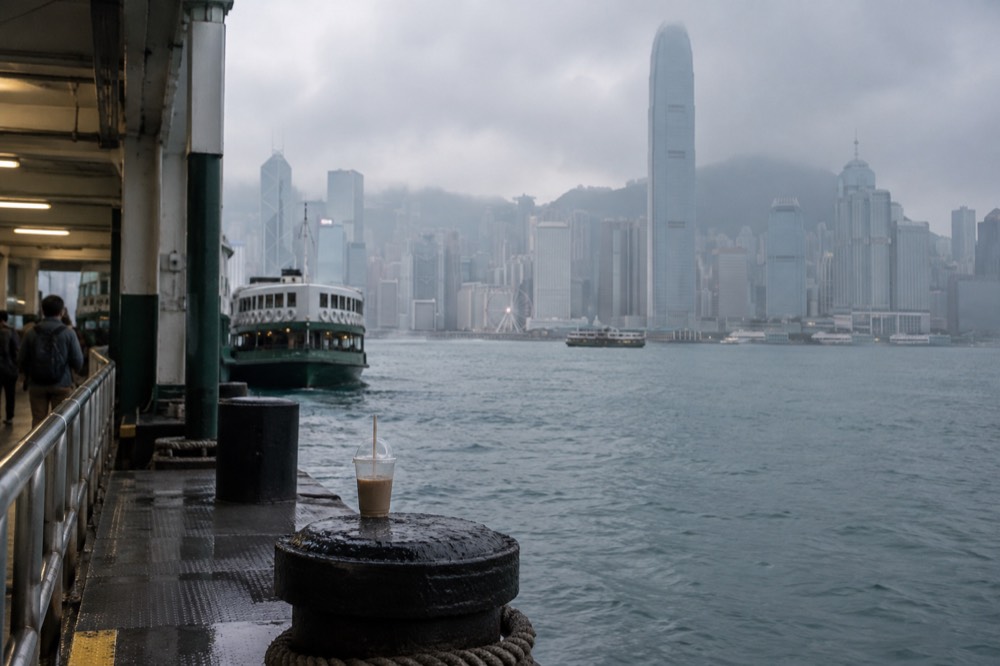
The failure months are February and March, and the reason is fog, not rain. March holds 27 per cent of possible sunshine, 77 per cent cloud, and 1.47 mean days with visibility under 1,000 metres. February carries 1.10 such days. Across the whole year Hong Kong averages only 3.70 of these fog days, and February and March hold 2.57 of them between the two. A dry February day looks fine on a rain forecast and still delivers nothing from the top, which is exactly the trap.
| Month | Possible sunshine | Mean cloud | Rain | Fog days (visibility under 1,000 m) |
|---|---|---|---|---|
| October | 55% | 58% | 120.3 mm | 0 |
| November | 52% | 58% | 39.3 mm | 0 |
| December | 48% | 57% | 28.8 mm | 0.03 |
| February | 32% | 72% | 38.9 mm | 1.10 |
| March | 27% | 77% | 75.3 mm | 1.47 |
Source for every row: Hong Kong Observatory monthly meteorological normals, 1991 to 2020.
Beyond weather, a few readers genuinely should not bother. Anyone with half a day and a hard list of other priorities should know the trip is not quick, and no walking time or distance from Central to the tram terminus is published anywhere, so plan generously. Anyone visiting only during a typhoon-signalled day will find the tram and the deck closed, per the operator's published rule. And anyone who dislikes heights, crowds or steep funicular gradients up to 25.7 degrees should weigh whether the free Galleria deck and a flat Lugard Road stroll deliver enough without the ride. For many, they do.
How to make the verdict work for you
Plan around the free core and buy only what you value. Go up by minibus route 1 at HK$11.80, the cheapest published fare of any way up the hill, or by the tram if the ride itself is the attraction. Check the Observatory's Peak webcams that morning, walk the Lugard and Harlech loop, and buy the deck ticket only if the extra height matters to you. That plan fits almost every budget and almost every traveller.
The transport ladder is fully published, so the choice is a real one. Citybus route 15 runs from the Central Ferry Piers or Exchange Square up to the Peak at HK$13.00 for the full adult fare. Route X15 runs from Central Ferry Pier No. 6 at HK$16.80. Green minibus route 1 runs between the Peak Public Transport Terminus and the Hong Kong Station Public Transport Interchange at HK$11.80, the cheapest published fare of any way up the hill, and its Central end sits right at the MTR connection for anyone arriving on the Airport Express. Taxis charge HK$29 for the first 2 km or any part of it, then HK$2.10 per subsequent 200 m, though no total fare to the Peak is published and none may be invented. The full comparison, including the ways down, is in the guide to reaching the Peak by bus, minibus and taxi.
If the tram is the part you want, the Peak Tram worth-it verdict covers the ride on its own merits, and the tour page for the Peak Tram ticket lays out the options side by side. The sixth-generation cars, in service since the August 2022 rebuild, carry 210 passengers, 167 seated and 43 standing, were built in Switzerland by Garaventa, CWA and Frey, and brought step-free access and larger panoramic windows. Anything describing 120-passenger red cars is describing the retired fifth generation, out of service since 2021, which is a quick way to date a competing article.
One last planning note that decides many schedules: there is no luggage storage at the Peak Tram stations or in The Peak Tower, and no car park in The Peak Tower, with parking at the adjacent Peak Galleria. Tripods and lighting equipment are not allowed in the tram, the tower or the deck, and drones are prohibited without management permission. Pets are fine inside The Peak Tower on a leash or in a stroller, but not on the tram except qualified guide dogs. Baby strollers must be folded before boarding and must not exceed 66 cm in width when folded. These small published negatives shape the day more than any superlative does.
For visitors who have read this far and decided the full experience is worth it, the round-trip combo is the option that covers both rides and the deck in one purchase, at the operator's published gate fare of HK$182 for an adult.
So, is it worth going? On a clear day between October and December, with the webcams showing blue, and a plan that treats the free ground as the main event and the tram and deck as optional upgrades, yes, without hesitation. On a foggy March afternoon with a rigid schedule and no fallback, the honest answer is to spend the day elsewhere and come back when the record says the view will be there.
Common questions about Victoria Peak
Is Victoria Peak worth going?
For most visitors, yes. The harbour panorama is one of the world's great city views, and the ground it is seen from, including the free Peak Galleria rooftop deck, Lugard Road and Victoria Peak Garden at 554 metres, costs nothing. The tram and Sky Terrace 428 are optional purchases that add a historic ride and extra height, not access to the view itself.
Is the view free, or do I need a ticket?
The view is free. The Hong Kong Tourism Board states the Peak Galleria offers a free viewing deck with panoramic views of the skyline and harbour, and Lugard Road, Harlech Road and Victoria Peak Garden are all free public ground. Tickets buy the tram ride and the Sky Terrace 428 deck on the tower roof.
Does the $10.59 ticket include Sky Terrace 428?
No. The $10.59 from-price buys a one-way adult Peak Tram ride only, with no deck admission and no ride back down. The operator's published gate fare for the one-way tram plus Sky Terrace 428 is HK$146, and HK$182 with a return ride.
What is the best month for a clear view?
October, on the Hong Kong Observatory's 30-year record: 55 per cent of possible bright sunshine, 58 per cent mean cloud and no normal fog days. November and December are close behind, with December the least cloudy and driest month of the year. February and March are the weakest, because of fog rather than rain.
Can I buy a ticket that skips the queue?
Not on the standard ticket. The operator states its timed tickets "do not provide priority boarding" and that queueing time depends on visitor numbers on the day. Buying ahead removes only the ticket-counter line. Genuine priority access exists in the Ruby Pass option, and the operator's own Peak Tram Ruby Special is published at HK$342 for an adult.
Does the tram go closed in bad weather?
Yes. When a tropical cyclone warning signal no. 8 or above, or a special inclement weather warning, is hoisted, the Peak Tram and Sky Terrace 428 close, per the operator's published rule. The operator recommends checking the Hong Kong Observatory's two Victoria Peak webcams before travelling.